

I love Vermeer, the 17th century Dutch painter. So much so that when I got a new laptop and had to name the hard drive, I named it “Vermeer”…and used one of his paintings as my desktop wallpaper.
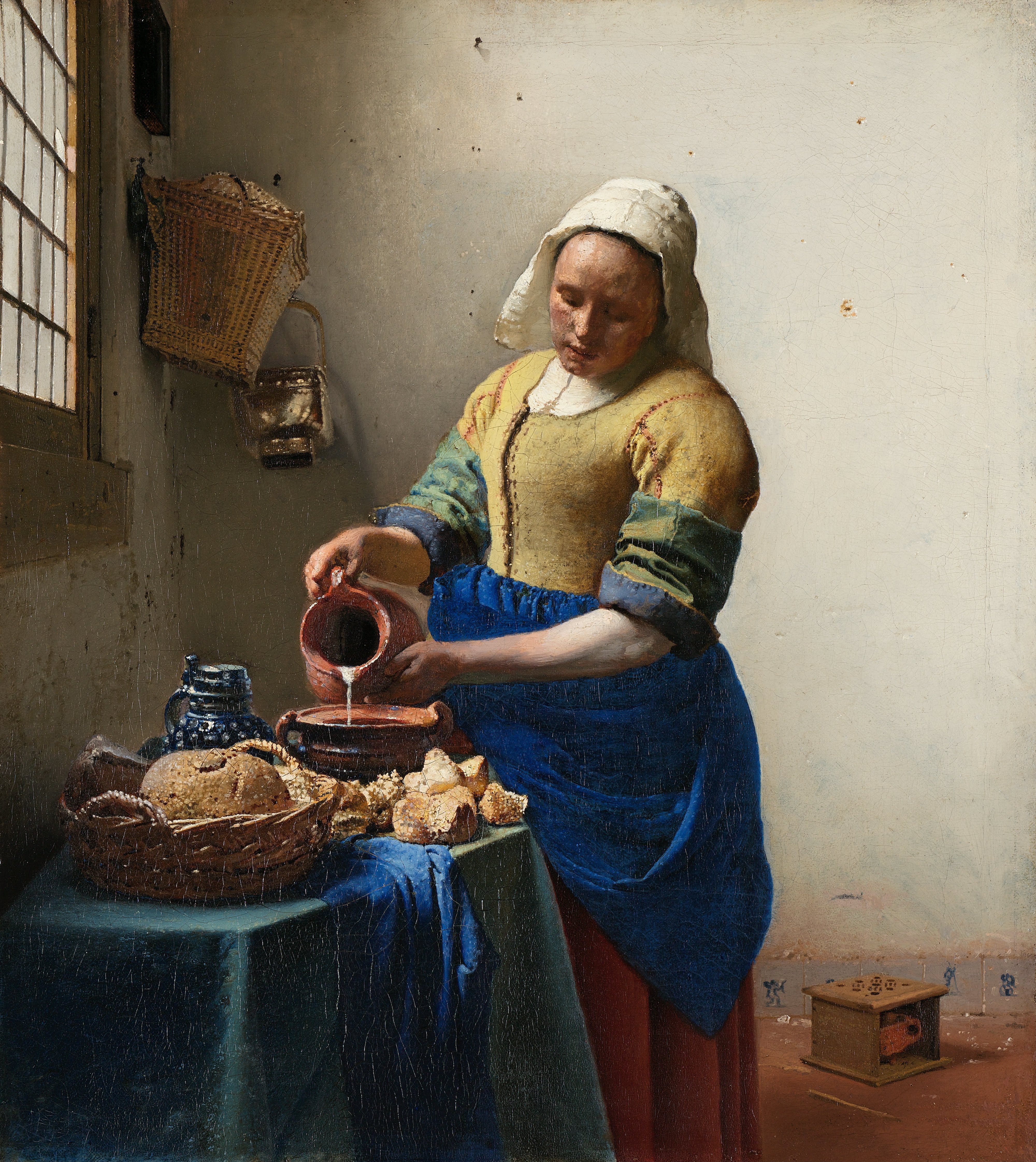
The way Vermeer painted with light is unmatched in the art world, both in his time and today. The perfect gradients he was able to capture look more like photographs than paintings. His ability to paint intricate details, like every thread in a tapestry, was remarkable. He truly was a rare and wonderful talent. At least that’s what I thought before I saw the documentary Tim’s Vermeer.
SPOILER ALERT. I am about to give away the big reveal in the documentary. I would rather you watch the doc and read this another time…but if you insist on reading now, you’ve been warned…
Tim Jenison is an inventor and an entrepreneur is also obsessed with Vermeer. He went on a journey to learn more about the painter and made some startling discoveries. It turns out that the gradients of light in Vermeer’s paintings are so subtle, so perfect that they are actually too perfect. The human brain, Jenison discovered, literally doesn’t have the ability to see a sun-lit wall then look away and recreate the same perfect gradations in a painting. It’s biologically impossible.
Jenison theorized that because Vermeer couldn’t have painted his paintings himself, he must have used some sort of optical devise to help him. We know that artists knew about camera obscuras, even back then. A camera obscura is a dark box with a pin hole in it which allows an image to be projected on a surface and traced. Except the subject matter in Vermeer’s works were too big and too complex to use a camera obscura. It wouldn’t have worked.
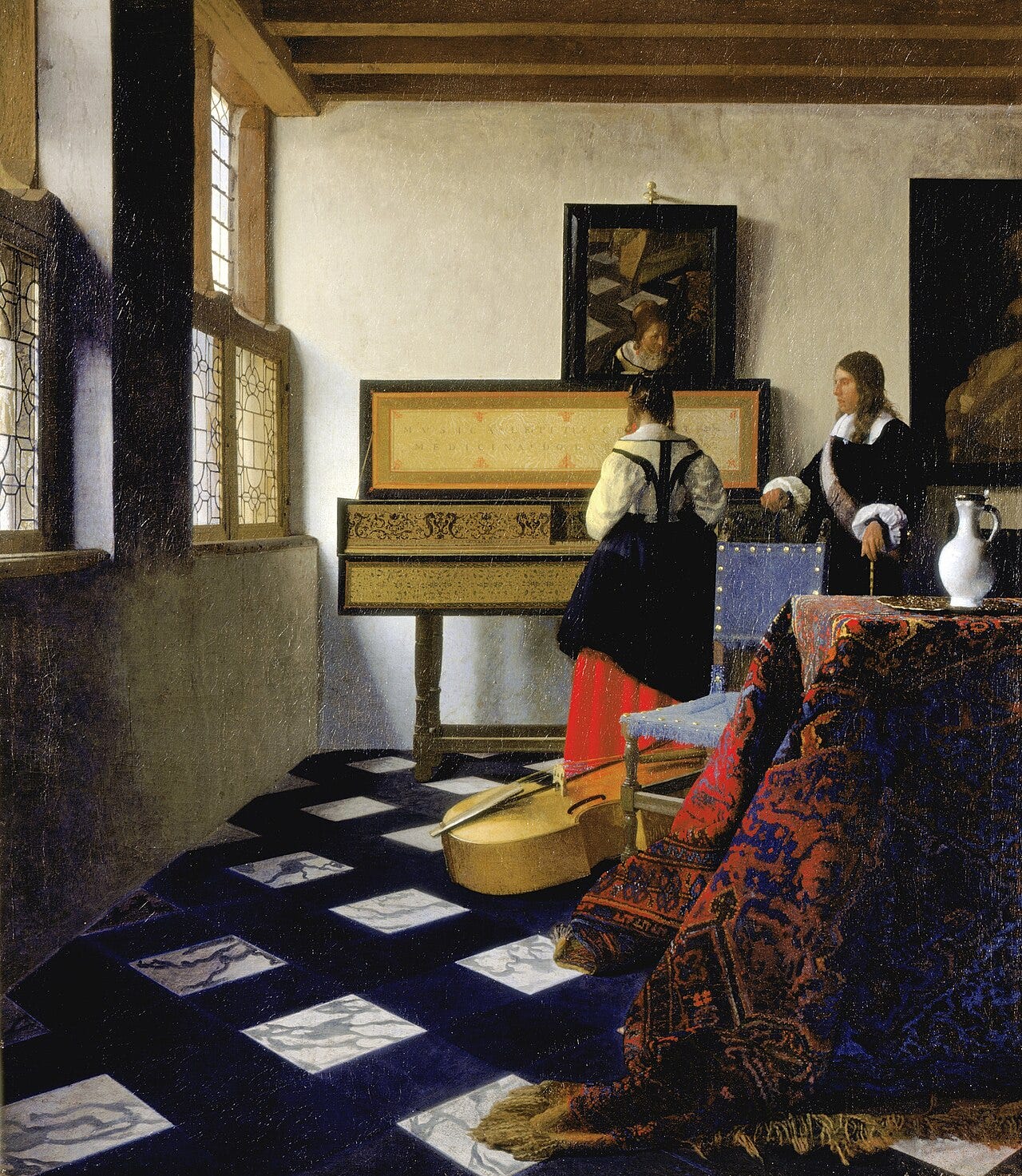
So Jenison set out to re-invent whatever device Vermeer may have used and attempt to repaint an actual Vermeer painting - The Piano Lesson, to be exact (shown above). And that’s exactly what he did. He figured out what Vermeer did and was able to make an exact copy of one of Vermeer’s most famous paintings…with the exact level of photographic detail, too!
Tim’s Vermeer is a wonderful documentary and the evidence is impossible to dispute. But it created a dilemma for me. This artist that I love didn’t have any amazing talent. He simply wasn’t the great painter I thought he was. Was he a fraud? Can I still love his work? Can I still admire him?
The simple answer is yes. Except I no longer admire him for being a great painter, I now admire him for being a great inventor. I took him off the list of great artists like Rembrandt, Hans Holbein, and Picasso and I added him to the list of great inventors like Thomas Edison, the Wright brothers and Alexander Graham Bell. And I still love Vermeer’s paintings for the same reason I love the Wright Flyer or the first telephone. Because they are proof of human ingenuity.
The Vermeer Dilemma presented a bigger lesson for me. We all have beliefs or narratives about others but sometimes some new piece of information is revealed that challenges our narrative. This is important, because our narratives and beliefs about a person create a set of expectations we have for them. And if our narrative about them is challenged, instead of adjusting our narratives, we usually think the person has let us down.
A few years ago, I went to a friend’s holiday party by myself. Except for the hostess, I didn’t know anyone there. So I did what I always do in a situation like that, I hovered around the food, then stood by myself in the corner and, after about 15 or 20 minutes, I left.
My friend was so mad at me for not staying and mingling and “being more friendly.” I explained that as an introvert, starting conversations with strangers in a social setting like that is awkward and uncomfortable for me (I also hate small talk). “I don’t believe you!” She fired back at me. “You aren’t an introvert, you literally stand on a stage in front of hundreds of people for a living!”
She had a story about me and I failed to live up to the expectations she had of me based on that story. The reality is, I’m rarely good in those situations. And what I do for work and how I feel at a social gathering full of strangers have nothing to do with each other. But this was a new detail about me that was inconsistent with the story she had about me. Worse, she was unable to adjust her expectations of me based on this new information and she stayed mad at me for a while.
This is what we do. When someone doesn’t meet the expectations we set for them based on our preconceived narrative, we hold them responsible for their perceived failing. Except they didn’t fail, we just didn’t know all the facts before we set our expectations. Such a mix-up is normal and not an issue. The real problem is when we aren’t able to adjust our stories and expectations in the face of new facts. This can do serious damage to our relationships - personal or professional. Indeed, when I learned that Vermeer “cheated,” I could have thought him a fraud and turned away from his paintings forever. Except that new fact gave me a new way to think of him instead.
Lets make the newly revealed truth of Vermeer be our guide. Let us be open to learning more about the people in our lives. Let us love them for who they actually are instead of being upset when they act in a way inconsistent with who we thought they were.
Wait … can I please clarify that Vermeer did paint all his painting, as his own original work, done by his own hand? Why does it matter how he viewed the original image? How does the use of a lense of a device change his work? Didn’t Monet’s paintings become more abstract as his eye sight faded? I’m fascinated by how you have changed your view of Vermeer? Aren’t all artist looking to distinguish their work from their peers? Isn’t it fascinating how art can evoke some many emotions?
In relation to being an introvert at a party, we all have a bullshit metre, some can tolerate a little and, some a lot. 😂 Sounds like your host friend didn’t provide the support an introvert needs at a party and then gaslighted you into believing you are the issue. My friends always buddy me up with someone (who likes in-depth robust discussion) and respect when I need to leave. The measure of a good host is how long the introverts stay? 😆
Wonderfully written article and I appreciate having a topic to ponder over. Thank you ☺️
This one hit close to home. I once found out that a mentor I really looked up to had spent years hiding what he actually felt, putting on a version of himself that was easier for everyone else to deal with. My first reaction was almost betrayal, like I'd been watching a performance instead of a person. But sitting with it longer, I realized hiding your feelings isn't always about deception. Sometimes it's just how you make a place livable when being fully seen feels too risky. That gap wasn't him letting me down. it was just me not seeing the whole picture. It was armor I never noticed. Same as the Vermeer reveal - it didn't make me think less of him, it just meant I finally saw clearly what I'd been looking at the whole time.